
Meniscus Tears, and When Surgery Is the Right Choice
A torn meniscus is one of the most common knee injuries seen in athletes, weekend sport players and everyday Australians. It can happen during football, netball, basketball, running, gym training or even a simple twist getting out of the car.
It also comes with a confusing amount of conflicting advice about if surgery is needed.
Some meniscal tears can heal on their own or respond well to physiotherapy. Certain types of tears in younger active people with repairable tissue, are best treated surgically.
The truth is that not all meniscus tears are the same, and the key is specialist assessment to know which is which.
Dr David Kitchen is an Adelaide orthopaedic specialist treating hip and knee conditions, including meniscus injuries, ACL injuries and sports knee injuries.
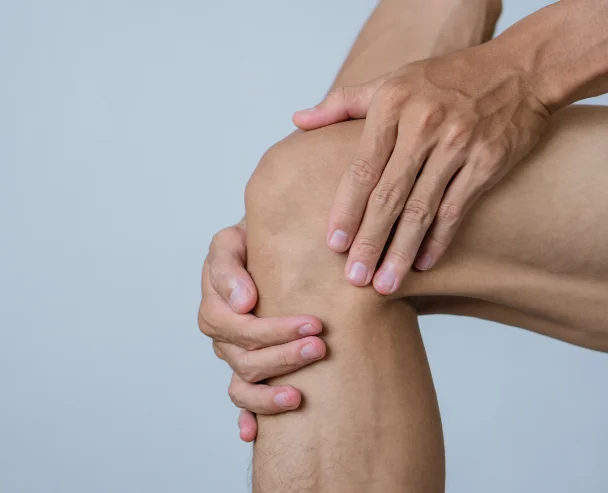
What is the meniscus?
Each knee has two menisci. The medial meniscus sits on the inner side of the knee, and the lateral meniscus sits on the outer side.
They are C-shaped pads of fibrocartilage that sit between the thigh bone (femur) and shin bone (tibia), whose job it is to help cushion the knee, distribute load, support smooth movement and add stability.
The menisci are not expendable. Preserving as much healthy meniscus as possible matters because it helps protect the knee over time. Meniscus repair, wherever suitable, is preferred over removing tissue because preservation is linked with better long-term joint protection compared with meniscectomy in suitable tear patterns.
How do meniscus tears happen?
In younger people, meniscal tears usually result from a traumatic incident, often a twisting or pivoting movement during sport. The classic mechanisms are a sudden twist or awkward landing on a bent knee.
In older adults, tears are more commonly degenerative. These occur as the meniscal tissue weakens as we age, and can happen from relatively minor movements or spontaneously. The tear may happen after a minor twist, a squat, kneeling, gardening or even without a clear injury. Degenerative tears are frequently associated with underlying osteoarthritis.
The distinction matters as treatment decisions are different between a traumatic tear and a degenerative tear.
What are the common symptoms of a meniscus tear?
Symptoms of a meniscus tear can vary, but the most important symptom to pay attention to is locking.
If your knee becomes stuck and you cannot fully straighten it, this can suggest a displaced tear, such as a bucket-handle tear, that is physically blocking movement, and should be assessed promptly.
Other symptoms may feel like, or include:
- Pain along the inner or outer joint line of the knee
- Swelling, sometimes developing over several hours
- Stiffness or difficulty fully bending the knee
- Trouble fully straightening the leg
- Clicking, catching or locking
- A feeling that the knee may give way
MRI is usually used to assess a suspected meniscus tear. X-rays do not show the meniscus itself, but they are useful for checking the overall knee joint and looking for signs of arthritis.
When can a meniscus tear be treated without surgery?
Many degenerative meniscal tears, particularly in middle-aged and older adults, respond well to a programme of physiotherapy, activity modification, strengthening and pain management.
Non-surgical treatment is typically more suitable when the knee is painful but still moves freely, symptoms are improving and there is no large unstable tear blocking movement. In these cases, surgery may not provide a better outcome than careful conservative management.
Non-surgical treatments +
- Physiotherapy to improve strength and movement
- Activity changes to reduce painful loading
- Anti-inflammatory medication
- Period of time for rest and recovery
- Managing contributing arthritis symptoms
- A guided and gradual return to walking, work or sport
When is surgery the better option?
Surgery is more likely to be recommended when the tear is causing mechanical symptoms or the knee is not improving with consistent, non-surgical care. This includes:
- A locked knee that cannot fully straighten
- A bucket-handle tear blocking movement
- Ongoing catching or painful clicking
- Symptoms that continue despite physiotherapy and activity changes
- A tear in a younger active patient with good healing potential
- A tear in the outer blood-supply zone where repair is possible
- Instability or loss of function affecting work, sport or daily life
In these situations, waiting too long can keep the knee irritated and may affect load-bearing confidence, strength and activity. For repairable traumatic tears, early assessment is beneficial because preserving the meniscus is the goal.
What does meniscus surgery involve?
Meniscus surgery is usually performed arthroscopically, also known as keyhole surgery.
Small incisions are made around the knee so a camera and specialised instruments can be inserted. Dr Kitchen then assesses the tear directly and treats it based on its location, pattern, tissue quality and healing potential.
The two main surgical options are meniscus repair or partial meniscectomy (trimming) and the right option is not decided by preference alone. It comes down to the tear.
Meniscus repair vs trimming: What is the difference?
Wherever possible, meniscus repair is preferred because it preserves more of the meniscus, which has long-term benefits for the knee.
The repair method involves stitching the torn section back together so it has a chance to heal and is more likely to be possible when the tear is in the outer part of the meniscus, where blood supply is better.
Repair is usually considered for younger active patients, traumatic tears and tear patterns with healing potential, but recovery is usually slower. The knee may need to be protected with crutches or a brace, and return to sport takes longer because the repair needs time to heal.
Trimming, or partial meniscectomy, involves removing the unstable torn portion that is catching, flapping or blocking smooth movement.
This method is typically a better choice when the torn tissue has poor healing potential or cannot be repaired. Recovery is usually quicker than repair, but the removed tissue is gone permanently, which is why preserving meniscus tissue remains the priority when repair is realistic.
What does recovery look like after meniscus surgery?
After meniscus repair, the knee usually needs more protection. Crutches or a brace may be required for the early phase and it can take several weeks to gradually transition to walking without support, with return to higher-level activity taking several months.
After meniscus trimming, patients can usually return to walking sooner with most walking more comfortably within the first couple of weeks. A return to most activities generally takes around four to six weeks, guided by swelling, strength and movement.
For either, your return to sport is not only a time-based decision. Running, jumping, pivoting and contact sport are very slowly reintroduced once the knee is moving well, strength has returned and the knee is performing with medical testing. Rushing this stage can increase swelling, pain or the risk of further injury.
FAQs
What does a locked knee mean?
A locked knee means you cannot fully straighten your leg. This can happen when a torn piece of meniscus moves into the joint and blocks normal movement. It should be assessed promptly.
Why is meniscus repair better than trimming?
When the tear can heal, repair is preferred to preserve more meniscus tissue. Trimming is used when the torn section cannot heal or is causing mechanical symptoms.
Can I return to sport after a meniscus tear?
Yes, but return to sport should be guided by your recovery, strength, movement and knee control. Pivoting and impact sports usually need a more careful progression, especially after repair.
When should I request a specialist referral?
Speak to your doctor about a referral for specialist assessment if your knee pain is not settling, you have locking or catching, your knee feels unstable or you cannot return to work, sport or normal activity because of your symptoms.
A consultation helps identify what type of meniscus tear you have and if arthritis is also present, non-surgical treatment is suitable or whether repair or trimming may be needed.
Dr David Kitchen, an experienced Orthopaedic Specialist in Adelaide, offers consultations at sportsmed Stepney, Henley Beach and The Specialist Clinic Port Pirie.
Already have your referral?
For appointments, phone (08) 8130 1228.
References:
Katz, J. N., Collins, J. E., Bisson, L., Jones, M. H., Irrgang, J. J., Selzer, F., Safran-Norton, C. E., Spindler, K. P., Yang, H. Y., Shrestha, S., Bennell, K. L., Sullivan, J. K., Kluczynski, M. A., Arant, K., Opare-Addo, M., Huizinga, J. L., Zimmerman, Z., Sople, D., Tonsoline, P., & Kale, M. (2025). A Randomized Trial of Physical Therapy for Meniscal Tear and Knee Pain. New England Journal of Medicine, 393(17), 1694–1703. https://doi.org/10.1056/nejmoa2503385
Noorduyn, J. C. A., van de Graaf, V. A., Willigenburg, N. W., Scholten-Peeters, G. G. M., Kret, E. J., van Dijk, R. A., Buchbinder, R., Hawker, G. A., Coppieters, M. W., Poolman, R. W., & ESCAPE Research Group. (2022). Effect of Physical Therapy vs Arthroscopic Partial Meniscectomy in People With Degenerative Meniscal Tears: Five-Year Follow-up of the ESCAPE Randomized Clinical Trial. JAMA Network Open, 5(7), e2220394–e2220394. https://doi.org/10.1001/jamanetworkopen.2022.20394
Siemieniuk, R. A. C., Harris, I. A., Agoritsas, T., Poolman, R. W., Brignardello-Petersen, R., Van de Velde, S., Buchbinder, R., Englund, M., Lytvyn, L., Quinlan, C., Helsingen, L., Knutsen, G., Olsen, N. R., Macdonald, H., Hailey, L., Wilson, H. M., Lydiatt, A., & Kristiansen, A. (2017). Arthroscopic surgery for degenerative knee arthritis and meniscal tears: a clinical practice guideline. BMJ, j1982. https://doi.org/10.1136/bmj.j1982
*This article is for general information and educational purposes only. It is not a substitute for professional medical advice, diagnosis, or treatment, and does not establish a doctor-patient relationship. All surgical procedures carry risks and results vary between individuals. Consult with Dr David Kitchen MBBS MA (Cantab) BA Hons PhD FRACS FAOrthA (MED0001951664), Orthopaedic Specialist, for a personalised treatment plan.